By the turn of the millennium, some of the most iconic supermodels of the '80s and '90s were aging out of the merciless but high-paying job of publicly wearing expensive clothes. In order to remain relevant, many altered their career trajectories: Linda Evangelista became the face of L’Oréal Paris; Heidi Klum signed a lucrative contract to co-host Project Runway; Janice Dickinson became a legendarily quarrelsome reality TV habitué; and so on.
A star can generate significant income by selling his or her name. Whether it’s a dazzling red-carpet collaboration (e.g., Lady Gaga donning a multimillion-dollar Tiffany necklace at the Oscars), a sleazy TV endorsement (e.g., a wizened and strangely excitable Joe Namath working himself into a frenzy as he plugs the scammy Medicare Advantage program), or a desperate late-career cash grab (e.g., Richard Simmons permitting his cranial likeness to be manufactured as a Chia Pet), a corporate partnership is one of the easiest ways for a famous person to rake in some extra money.
But there is a more extreme form of celebrity huckster to which we would like to draw your attention: the ex-model-turned-home-furnishings-designer. Today, we will examine the ne plus ultra of this species of peddler: Kathy Ireland.
Career history: Ireland was “discovered” at age 17, whereupon she launched her modeling career. From 1984 to 1996, she was a frequent feature in Sports Illustrated swimsuit editions. During this time, Ireland rounded out her résumé by starring in various box office failures and playing bit parts in doomed sitcoms.
Entrance to hucksterism: In 1993, as her modeling career showed early signs of flagging, the entrepreneuse “designed” a line of socks for K-Mart.
Current company: kathy ireland Worldwide® (kiWW®)

Above: the kathy ireland Worldwide® advertising aesthetic is defined by hastily-assembled collages of stock photographs.
Headquarters: Its website breathlessly informs us, “kiWW® maintains offices and design studios in Honolulu, Hawaii, Los Angeles, Santa Barbara kathy ireland Worldwide maintains Head Quarters in Rancho Mirage,CA.”
Slogan: "...finding solutions for families, especially busy moms."™ The quotation marks are apparently part of the trademarked slogan, suggesting Ireland, or somebody else, actually uttered the words; the ellipsis, one of countless on the website, implies the statement had a beginning part that failed to make it to the trademarking stage. (Elsewhere on the website, Ireland alarmingly puts "going to sleep" in quotation marks when dispensing wisdom to harried parents of insomniac children, casting a murderous, Godfatherian cloud over her motherly advice.)
Products: kiWW® plasters its name on an unsettling array of items, presented on the site in an almost interminable stream-of-consciousness-style list: "furniture, flooring, decorative surfaces, lighting and accessories, window treatments, replacement windows, home office and entertainment, leather and microfiber, infant, youth and adult top of bed, bedding, candles, hand-painted fine porcelain, decorative shelving, apparel, fresh-cut flowers, skin-care for men and women, wall coverings, ceiling fans, mattresses, totes, hand bags, travel bags, frames, wall décor, clocks, Design It Yourself jewelry and crafting supplies, kitchen and bath cabinetry, infant furniture, Ready to Assemble (RTA), decorative shelving, fine jewelry, wigs and hair extensions, real estate, vacation events, wedding program licenses, music and film licenses, publishing, greeting cards, Kathy is the author of six books."
Qualifications for promoting these items: It’s not surprising that Ireland would put her imprimatur on fashion- and appearance-related goods like jewelry and wigs; less apparent are her credentials to hawk things like mattresses, kitchen cabinetry, and music licenses.
Evidence of the “designer” at work: In the clunkily-titled video “ki Home by Shaw Fall Flooring Days”, a particularly haggard Ireland, clad in a white lab coat, observes and gesticulates as swarming technicians subject nearby rug samples to various tests; this behind-the-scenes footage is intercut with clips of the visibly exhausted ex-supermodel haranguing skeptical showroom browsers about her flooring products.

Above: the "designer" feigns scrutiny of carpet pile.
Meta-endorsements: Sometimes, in what we dub "meta-endorsements", celebrities openly declare support for other celebrities’ products or services. A video promoting kiWW® reveals that the star galaxy takes a generally favorable view of the onetime catwalker’s undertakings. “She’s brilliant,” gushes late fellow pitchwoman Elizabeth Taylor. “I think she’s a hero,” confesses former chart-topper Anita Pointer. Only ‘80s primetime soap fixture Joan Van Ark seems reluctant to bestow such ecstatic praise, instead tendering a strictly fact-based appraisal of Ireland’s activities. “For the women down at the Los Angeles Mission,” Van Ark states mechanically, her countenance expressionless, “she has donated furniture.”
Above: A grinning Ireland, restrained by Liz Taylor's bloated claw, poses at a World AIDS Day photo-op.
Representative products: Interior design rules, advises Ireland, “are made to be broken.” She also reminds us that “your accessories tell a story about you to guests.” With these insights in mind, we have selected three sample items from Ireland’s collections for your consideration.
1. "Brushed copper antique clock with coffee mug graphic"
Story this product tells your guests: You purchase and enjoy furnishings that depict food and beverage items.
Interior design rule broken by this product: Do not decorate your home as if it were a coffee shop in a mid-90s sitcom.
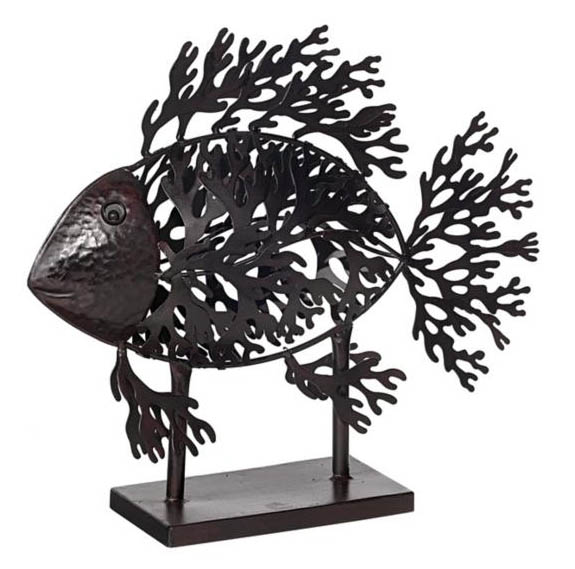
2. "Reef Reflections Decorative Accessory"
Story this product tells to your guests: You shop blindfolded.
Interior design rule broken by this product: When selecting seaweed-motif objets, take care to avoid those that resemble manmade disasters like chemical plant explosions and ruptured oil tankers.
3. "Sandy Retreat Table Lamp"
Story this product tells your guests: You also own a pair of khaki slacks embroidered with scores of tiny red lobsters.
Interior design rule broken by this product: Tacky beach furniture is not an aesthetically appealing decorative accent, even when rendered in miniature.
Gesture of humility to millions of paying customers: Following the initiatives of important poet e.e. cummings and Grammy winner k.d. lang, Ireland does not capitilize her initials when they appear in her company's name.
Approximate earnings: kiWW® raked in $1.4 billion of retail sales last year. As the helmswoman of the empire, Ireland herself is thought to earn in excess of $10 million annually, far exceeding Linda Evangelista's fabled, but relatively piddling, $10,000 a day.